Type BOOLEAN is extended in 23/26AI and supports more values for sql and PL/SQL
| Type | Accepted values |
|---|---|
| BOOLEAN literals | TRUE, FALSE |
| Strings |
|
| Numbers | 1, 0 |
| NULL | NULL |

Type BOOLEAN is extended in 23/26AI and supports more values for sql and PL/SQL
| Type | Accepted values |
|---|---|
| BOOLEAN literals | TRUE, FALSE |
| Strings |
|
| Numbers | 1, 0 |
| NULL | NULL |
Oracle has supported the RETURNING clause in DML for years, but Oracle Database 23ai / 26ai significantly improves its usability by allowing direct access to OLD and NEW column values in INSERT UPDATE DELETE MERGE statements.
This makes it much easier to capture before-and-after data without triggers or extra queries.
Oracle Database 23ai (and 26ai) introduces table value constructors using the VALUES clause.
This lets you define inline row sets directly in SQL—no DUAL, no UNION ALL, no temporary tables.
You can use VALUES in SELECT, INSERT, UPDATE, MERGE, and WITH clauses.
If you’ve ever written analytics queries with RANK(), DENSE_RANK(), ROW_NUMBER(), AVG() OVER(...), etc., you know the pain:
SELECTWHEREOracle Database 26ai fixes this nicely with QUALIFY.
SELECT
  ...
  RANK() OVER (ORDER BY revenue DESC) AS rev_rank
FROM test_tbl
QUALIFY rev_rank <= 5
ORDER BY rev_rank, name;
QUALIFY is evaluated after window functions are computed, so you can filter on them directly — no nesting needed.
Oracle Database 23ai introduces GROUP BY ALL, a small SQL feature that removes the need to manually list columns in the GROUP BY clause.
UPDATE and DELETE in Oracle Database 23ai / 26aiOne of the most elegant SQL enhancements in Oracle Database 23ai (continued in 26ai) is the support for direct joins in UPDATE and DELETE statements. This syntax lets you perform DML that references other tables using a FROM clause—without resorting to nested subqueries or EXISTS.
The new syntax
UPDATE with direct join
UPDATE target_table alias
   SET column = expression [, column = expression, ...]
   FROM join_table jt1 [JOIN jt2 ON ...]
  WHERE join_condition;
DELETE with direct join
DELETE target_table alias
  FROM join_table jt1 [JOIN jt2 ON ...]
 WHERE join_condition;
Oracle determines the target of the DML by the table that follows the UPDATE or DELETE keyword.
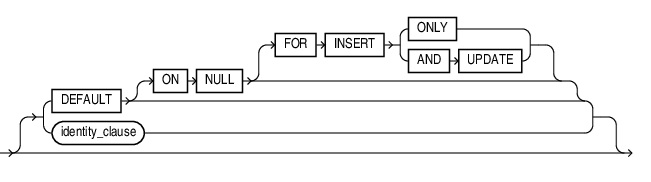
DEFAULT ON NULL in ActionOracle 23c introduced a subtle but powerful enhancement to column defaults: the ability to decide when a default value should automatically replace a NULL.
Until now, the DEFAULT clause worked only when the column was omitted in an INSERT. With 23c, we can tell Oracle to also apply defaults when you explicitly insert NULL, and even when you update a column to NULL.
This article presents how to install Oracle 26AI Release on Oracle Enterprise Linux 9 (OEL9) using RPM.
Continue readingThis article presents how to install Oracle 23AI Release on Oracle Enterprise Linux 9 (OEL9) using RPM.
This article presents how to install Oracle Enterprise Linux 9.
I assume you have already downloaded Oracle Enterprise Linux 9 64 bit(about 4 G) and you know how to use VirtualBox 64 bit(100M). Create virtual machine with default settings for Oracle Linux 64 bit. You can set 8GB for future Oracle database software installation and 64G for disk. Rest of options you can keep default.
